
Mt. Kilimanjaro
Mount Kilimanjaro-The Roof Of Africa
Kilimanjaro. The name itself is a mystery wreathed in clouds. It might mean Mountain of Light, Mountain of Greatness or Mountain of Caravans. Or it might not. The local people, the Wachagga, don’t even have a name for the whole massif, only Kipoo (now known as Kibo) for the familiar snowy peak that stands imperious, overseer of the continent, the summit of Africa. Kilimanjaro, by any name, is a metaphor for the compelling beauty of East Africa. When you see it, you understand why. Not only is this the highest peak on the African continent; it is also the tallest free-standing mountain in the world, rising in breathtaking isolation from the surrounding coastal scrubland – elevation around 900 metres – to an imperious 5,895 metres (19,336 feet). kilimanjaro is one of the world’s most accessible high summits, a beacon for visitors from around the world.
Most climbers reach the crater rim with little more than a walking stick, proper clothing and determination. And those who reach Uhuru Point, the actual summit, or Gillman’s Point on the lip of the crater, will have earned their climbing certificates. And their memories. But there is so much more to Kili than her summit. The ascent of the slopes is a virtual climatic world tour, from the tropics to the Arctic. Even before you cross the national park boundary (at the 2,700m contour), the cultivated footslopes give way to lush montane forest, inhabited by elusive elephant, leopard, buffalo, the endangered Abbot’s duiker, and other small antelope and primates.
Higher still lies the moorland zone, where a cover of giant heather is studded with otherworldly giant lobelias. Above 4,000m, a surreal alpine desert supports little life other than a few hardy mosses and lichen. Then, finally, the last vestigial vegetation gives way to a winter wonderland of ice and snow – and the magnificent beauty of the roof of the continent.
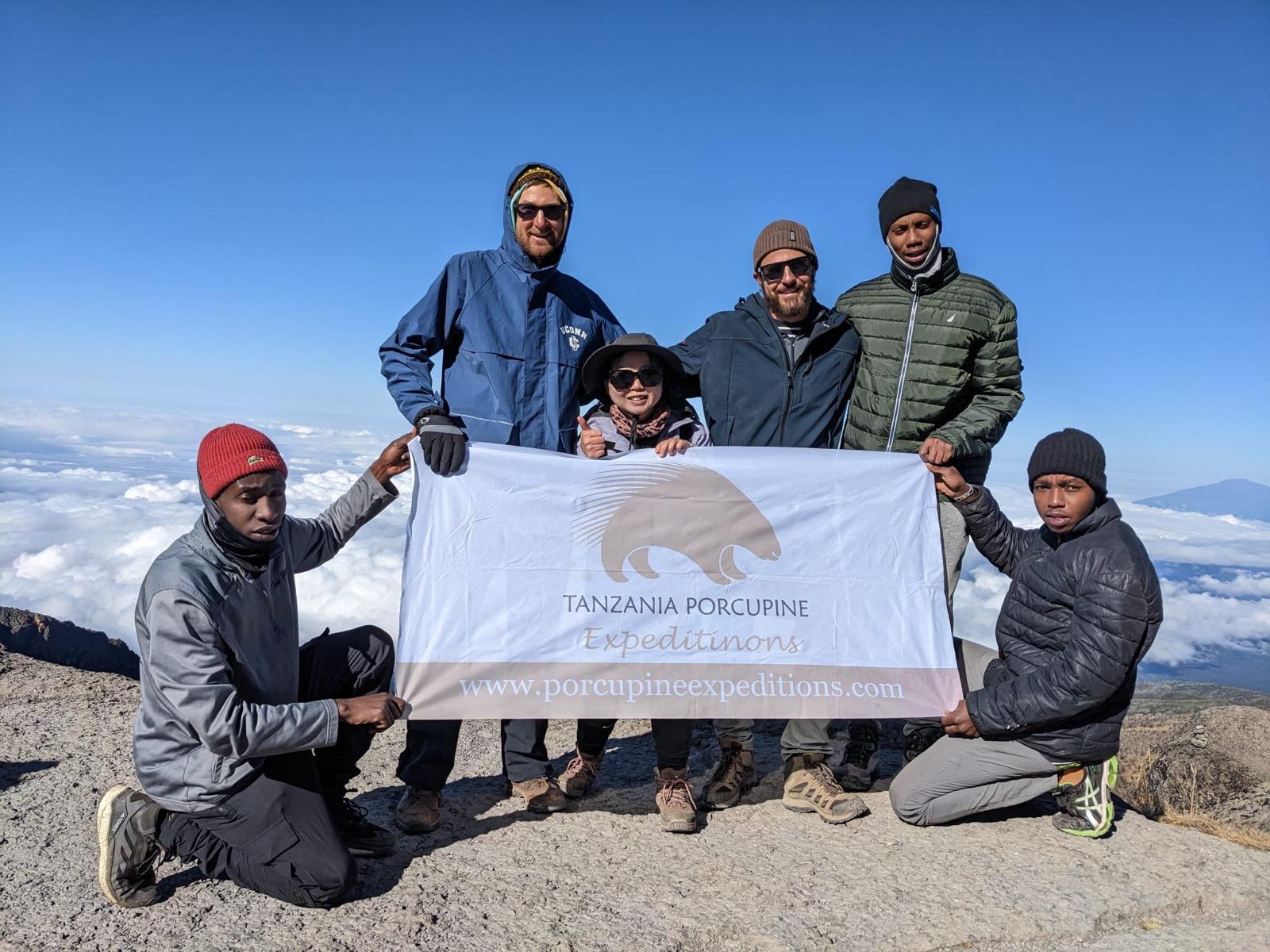
Conquering heights has been always been a human forte. So challenge yourself to climb the most hikeable summits on the planet by planning an African safari and undertaking Kilimanjaro climbing expeditions. With our tailor-made Kilimanjaro climbing packages, you have an opportunity to conquer Africa’s highest summit and make lifetime memories.
There is much more to Kilimanjaro than hiking. Take part in Kilimanjaro climbing expeditions while taking the most scenic route and find yourself lost in the panoramic beauty of the surroundings while scaling the majestic peak.
Take a virtual climatic tour of the world while scaling the peak from the tropical bottom to the Arctic top and create your dream holiday through our custom Mt. Kilimanjaro climb packages.
Explore enlivening views of ice fields on the crater rim while you cross the lunar desert. Give yourself a lifetime opportunity to witness a magical sunrise and spot Colobus monkeys on the lower slopes. Let our Kilimanjaro climbing guides be your escorts at every twist and turn while you scale the snowcapped peaks and explore the delights of ‘Kili.’ Enjoy the breathtaking camping trek during your enthralling Mt. Kilimanjaro climbing holidays and come back for more!
Climbing this inactive volcano doesn’t require you to burn a hole in your pocket. Conquer Africa’s “sleeping giant” with our rugged and expert elite climbers and enjoy an exhilarating hiking journey like never before, that too at a price that fits your budget. We pride ourselves on offering tailor-made Mt. Kilimanjaro climb packages for visitors.
No, we don’t offer a cheap Kilimanjaro climb that compromises with safety standards. We offer the best yet affordable Kilimanjaro climb prices for the adventurous traveler wishing to save money, adding great value to your African safari.
So whether you seek adventure on your Tanzania safari or some goose-bumping hiking experience, you can have it all at inexpensive Mount Kilimanjaro climb prices, with packages customized to fit in your requirements and budget. We also organize group climbs during months with the best weather, so you don’t need much time for acclimatization and can make the most of the group package.
For a little more comfort and superior service delivery, you may opt for luxury Mt. Kilimanjaro climb packages and pay a little extra for the added services.
As a premier Kilimanjaro climbing company, we boast a team of trained porters and guides, who belong to the region and are familiar with its terrain. Our highly skilled mountain guides are trained to make your tailor-made Kilimanjaro climbing trips safe and full of fun, without rushing our ascent.
You have a multi-day program to experience and explore the majestic peak and undertake an enthralling journey to Africa’s wilderness. Taking an African safari with one of the leading Kilimanjaro climbing companies can be all the difference between a fun-filled holiday and a hushed up hike.
We set the standards in guided mountaineering and will take you through the routes and passages that bring you up close to an adventurous retreat.
If you seek a truly challenging and fulfilling adventure, challenge yourself to hike Africa’s highest summit as part of your guided Kilimanjaro climbing trips and you will never look back! Enjoy halting at our well-furnished accommodation facilities after a tough climb and rejuvenate your senses with a stay in nature’s paradise that brings you up close with nature.
The History of Mount Kilimanjaro
Mount Kilimanjaro has long captured the imagination of explorers, travelers, and local communities.
The first recorded European sighting occurred in 1848 when German missionary Johannes Rebmann reported seeing a snow-capped mountain near the equator. His claims were initially dismissed because many believed snow could not exist in tropical Africa.
In 1889, German geographer Hans Meyer and Austrian mountaineer Ludwig Purtscheller completed the first successful recorded ascent to the summit.
Since then, Kilimanjaro has become one of the world’s most famous trekking mountains and a major tourism attraction for Tanzania.
Popular Kilimanjaro Climbing Routes
Several routes lead to the summit, each offering unique scenery, challenges, and success rates.
Machame Route
Often called the “Whiskey Route,” Machame is the most popular climbing route.
Highlights include:
- Excellent scenery
- High summit success rates
- Diverse landscapes
- Good acclimatization profile
Duration: 6–7 Days
Marangu Route
Known as the “Coca-Cola Route,” Marangu is the only route with mountain huts instead of camping.
Highlights include:
- Comfortable accommodation
- Direct approach
- Suitable for beginners
Duration: 5–6 Days
Lemosho Route
Lemosho is considered one of the most scenic routes on Kilimanjaro.
Highlights include:
- Remote wilderness
- Excellent acclimatization
- High summit success rates
- Beautiful Shira Plateau
Duration: 7–8 Days
Rongai Route
Approaching from the northern side near Kenya, Rongai offers a quieter experience.
Highlights include:
- Fewer climbers
- Drier conditions
- Unique perspectives
Duration: 6–7 Days
Northern Circuit Route
The longest and most comprehensive route.
Highlights include:
- Highest summit success rate
- Exceptional acclimatization
- Panoramic views
- Least crowded trail
Duration: 8–10 Days
Umbwe Route
The steepest and most challenging route.
Highlights include:
- Rapid ascent
- Low traffic
- Spectacular scenery
Best suited for experienced trekkers.
Duration: 5–6 Days
Wildlife on Mount Kilimanjaro
Although most visitors focus on climbing, Kilimanjaro’s lower slopes support an impressive variety of wildlife.
Animals occasionally encountered include:
- Colobus Monkeys
- Blue Monkeys
- Bushbucks
- Duikers
- Tree Hyraxes
- Serval Cats
- Elephants (lower forest areas)
- Buffaloes (lower forest areas)
Birdwatchers can enjoy sightings of:
- Hartlaub’s Turaco
- Crowned Eagles
- Sunbirds
- Hornbills
- Silvery-cheeked Hornbills
The Summit Experience
The final ascent to Uhuru Peak is often the most challenging and rewarding part of the journey.
Most summit attempts begin around midnight, allowing climbers to reach the top at sunrise. As dawn breaks over the African continent, climbers are rewarded with breathtaking views of glaciers, volcanic landscapes, and endless plains stretching far into the distance.
Standing at Uhuru Peak, the highest point in Africa, is an emotional and unforgettable achievement that remains a lifelong memory for many travelers.